
Prepared by Lindsey Assamouah Abotsi
Along the Gulf of Guinea, the ocean has always defined life. For decades, it provided fish for local markets, a breeze to cool shoreline homes, and a playground for children. But today, as climate change accelerates, the rising sea is encroaching on coastal villages in Côte d’Ivoire and Ghana, turning once-vibrant shorelines into zones of extreme vulnerability.
For families in towns like Azurety, Attoutou B, Ada West or Anloga, climate disruption isn’t an abstract environmental debate—it is an existential crisis measured in crumbling walls, flooded classrooms, and lost livelihoods.
Yet, where traditional engineering often falls short or proves prohibitively expensive, an ancient, living answer is taking root: Nature-Based Solutions (NbS).
« Because there are no mangroves left, the rising sea comes straight into our village, flooding our houses and destroying our roads, » shares a local fisher from Téfrédji. « When the water comes, everything stops. »
His story reflects a stark reality across West Africa. In Côte d’Ivoire alone, nearly 95% of mangrove ecosystems have disappeared over the last 50 years due to urbanization, deforestation, and changing coastal dynamics. Without these natural buffers, tropical downpours and aggressive storm surges breach inland communities with unyielding force.
At Habitat for Humanity, we know that a house is only as safe as the ground beneath it. If shoreline erosion washes away a foundation, a child’s right to health, education, and shelter vanishes along with it. That is why Nature-Based Solutions have moved from the margins of environmental policy to become a core strategic pillar in sustainable housing and community resilience.
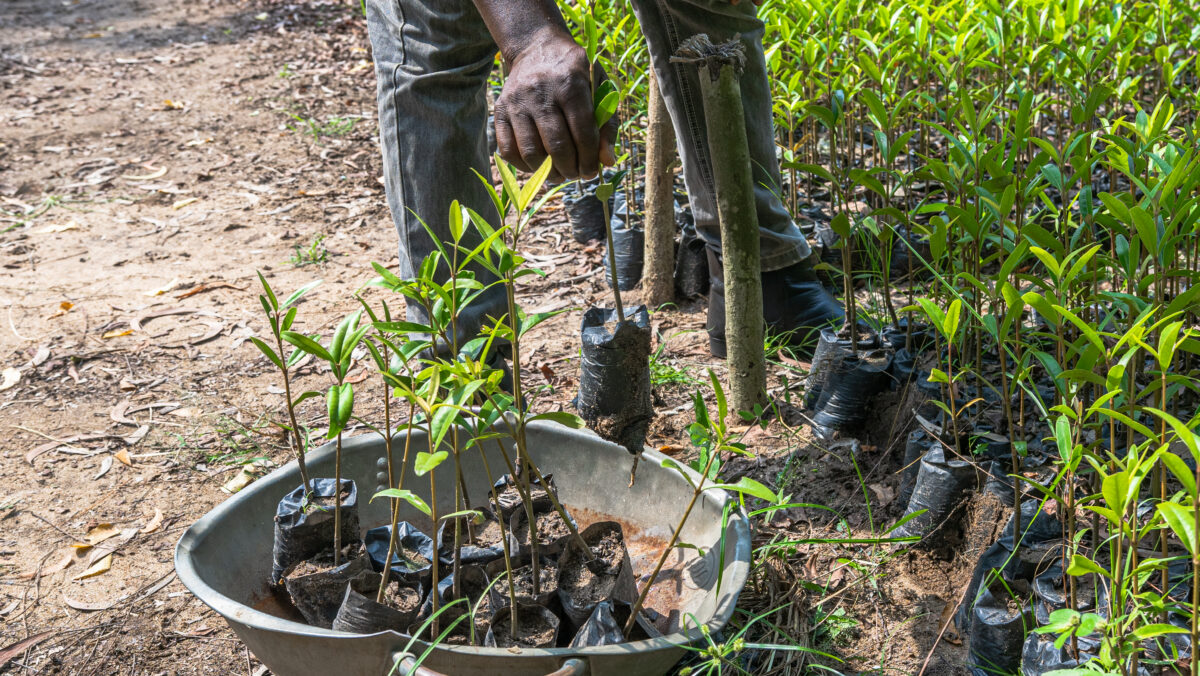
Nature-Based Solutions refer to actions that protect, sustainably manage, and restore natural or modified ecosystems to address societal challenges effectively and adaptively—simultaneously providing human well-being and biodiversity benefits.
In the regional project « Improving the Resilience of Coastal Communities in Côte d’Ivoire and Ghana »—led by UN-Habitat in partnership with Habitat for Humanity International, the Adaptation Fund, the Abidjan Convention, and the University of Twente—NbS forms the ecological backbone of our intervention strategy:
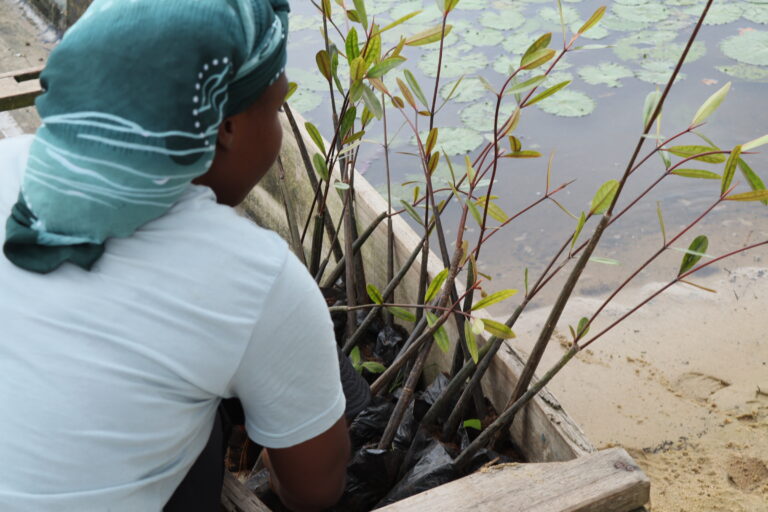
When communities gather to build green infrastructure, the impact ripples across every aspect of life principle we call the Multiplier Effect.
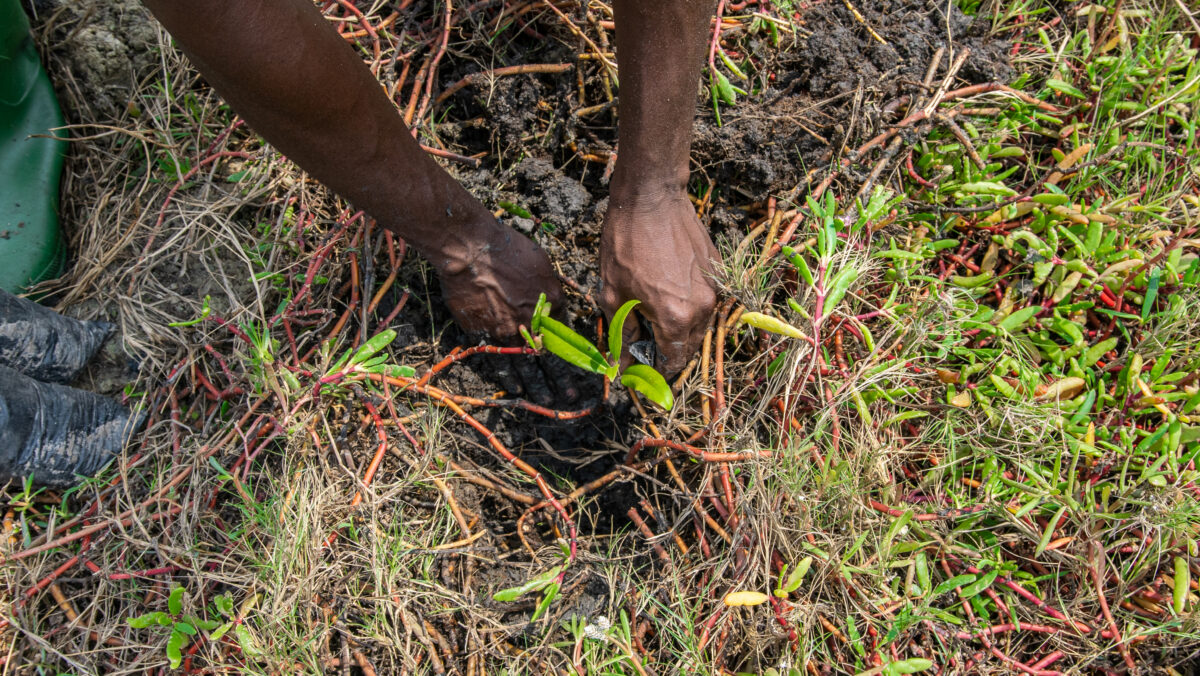
Take the community nurseries in Attoutou B. Rather than relying on external contractors, local residents collect propagules, nurture young seedlings, and manage the planting sites themselves. Youth and women’s groups lead the monitoring teams, gaining specialized skills in environmental stewardship and community organizing.
This participatory model transforms vulnerability into active leadership. Safe shorelines mean dry school grounds, allowing children to attend classes without interruption. Stable land enables families to invest in their homes with confidence, knowing their structures will endure seasonal floods.
« Restoring these plants means protecting our homes, our community, and ensuring our nets will still bring back fish tomorrow, » the fisher adds with newfound optimism.
Nature-Based Solutions prove that environmental protection and human housing are inseparable. By combining ecological restoration with resilient shelter, early warning systems, and local economic adaptation, we aren’t just reacting to climate change—we are empowering 87,000 residents across Côte d’Ivoire and Ghana to become the primary architects of their own future.
A secure home begins with a safe environment. Together, we are turning uncertainty into lasting dignity—one mangrove sprout at a time
Partner with us or support our climate resilience projects across West Africa:
Email us: hfhci@habitatci.org
Learn more: Adaptation Fund Project – Habitat for Humanity Côte d’Ivoire