Mangroves: Habitat for Humanity and Partners Launch Regional Restoration Initiative in Côte d'Ivoire and Ghana
Prepared by Lindsey Assamouah Abotsi
Attoutou B (Jacqueville), Côte d’Ivoire – July 23, 2026 — Just days ahead of International World Mangrove Day, celebrated on July 26, partners of the regional project « Improving the Resilience of Coastal Communities in Côte d’Ivoire and Ghana » officially launched the mangrove restoration campaign in Côte d’Ivoire.
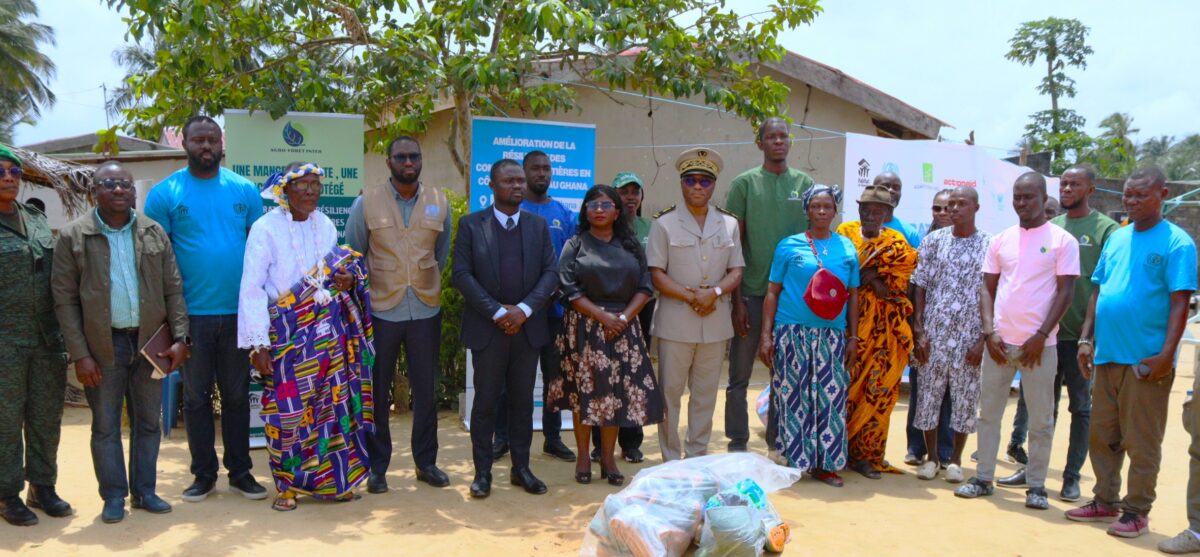
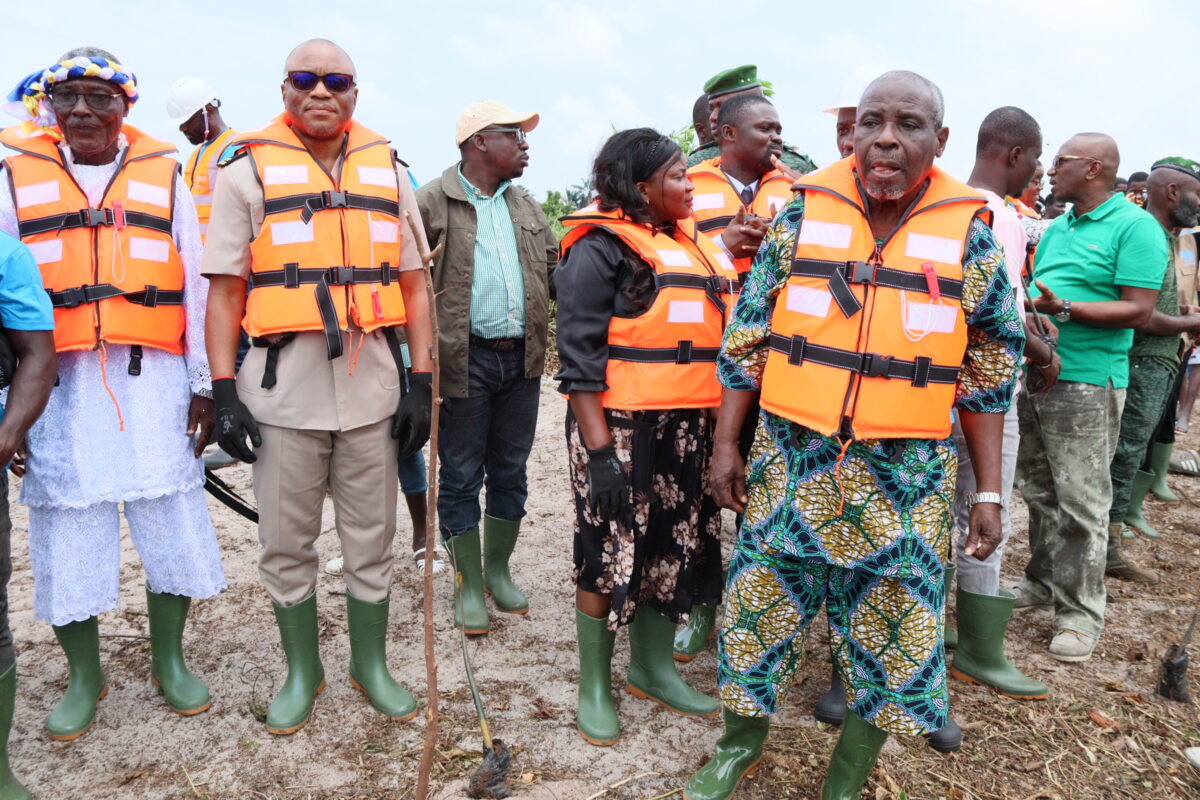
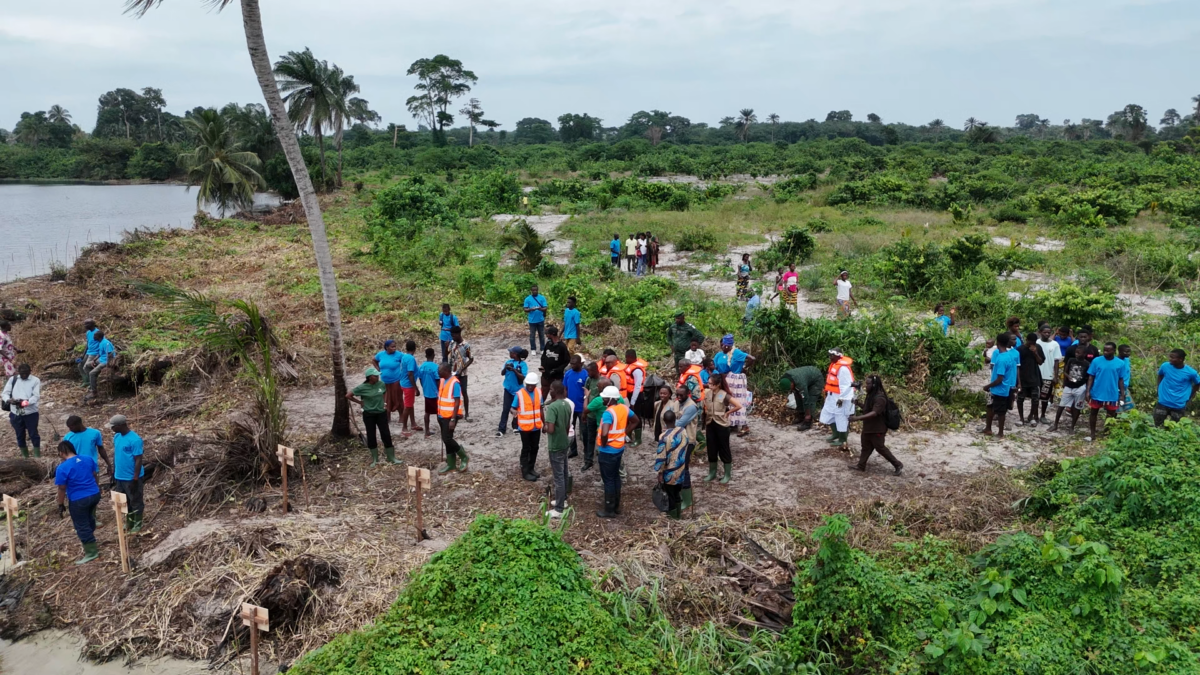
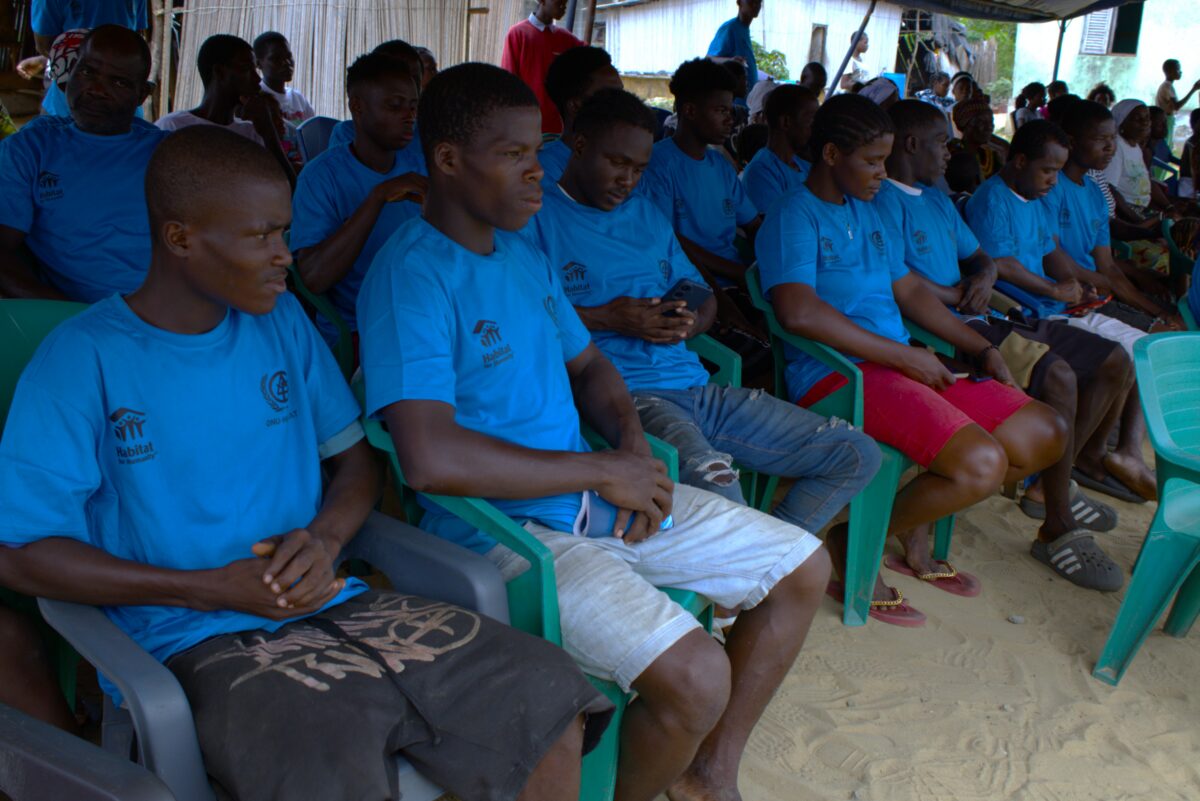
The ceremony, held in the village of Attoutou B, marks the transition from the preparatory phase to the operational implementation of coastal ecosystem restoration activities. It brought together national and local authorities, traditional leaders, coastal communities, as well as technical and financial partners committed to this cross-border initiative.
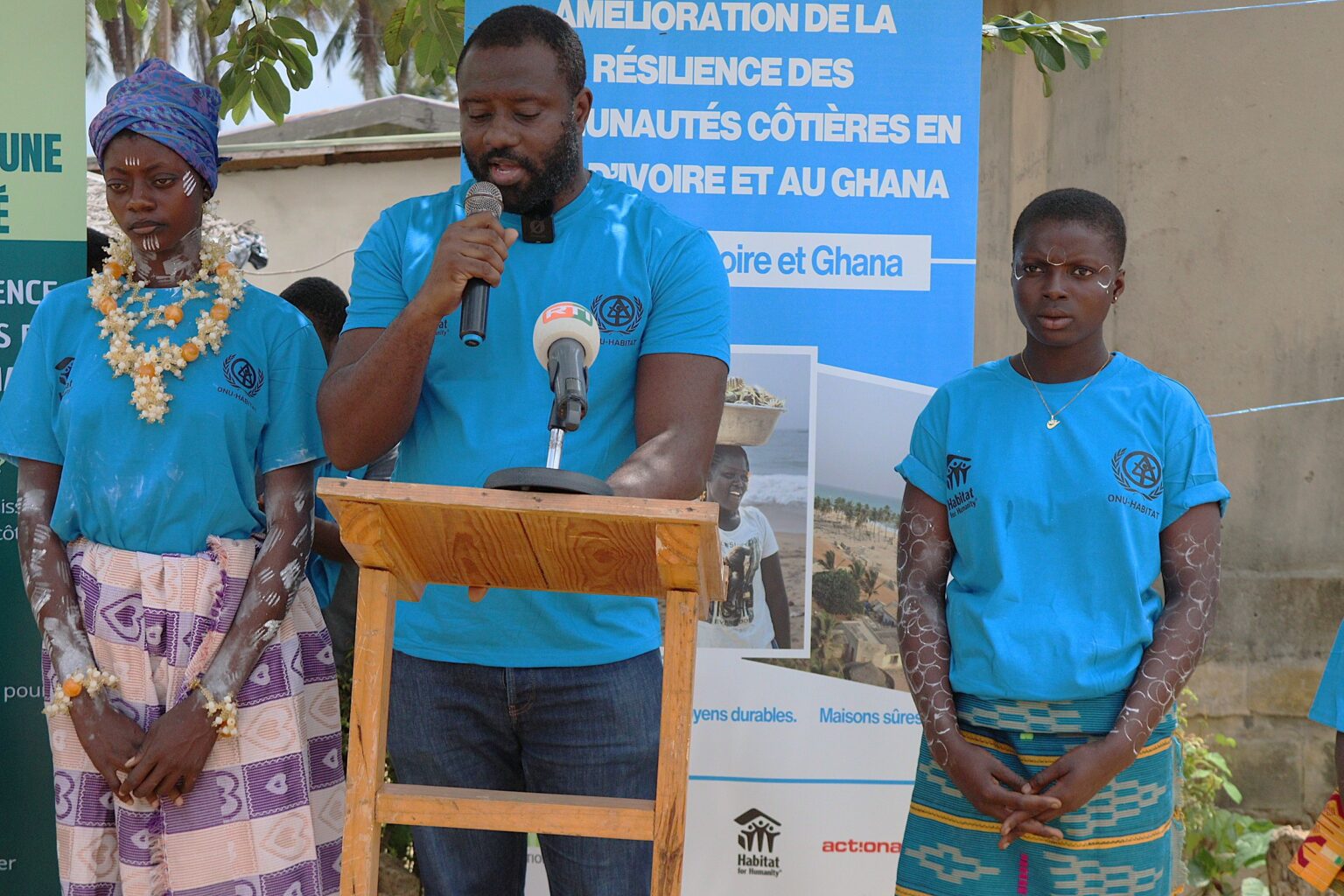
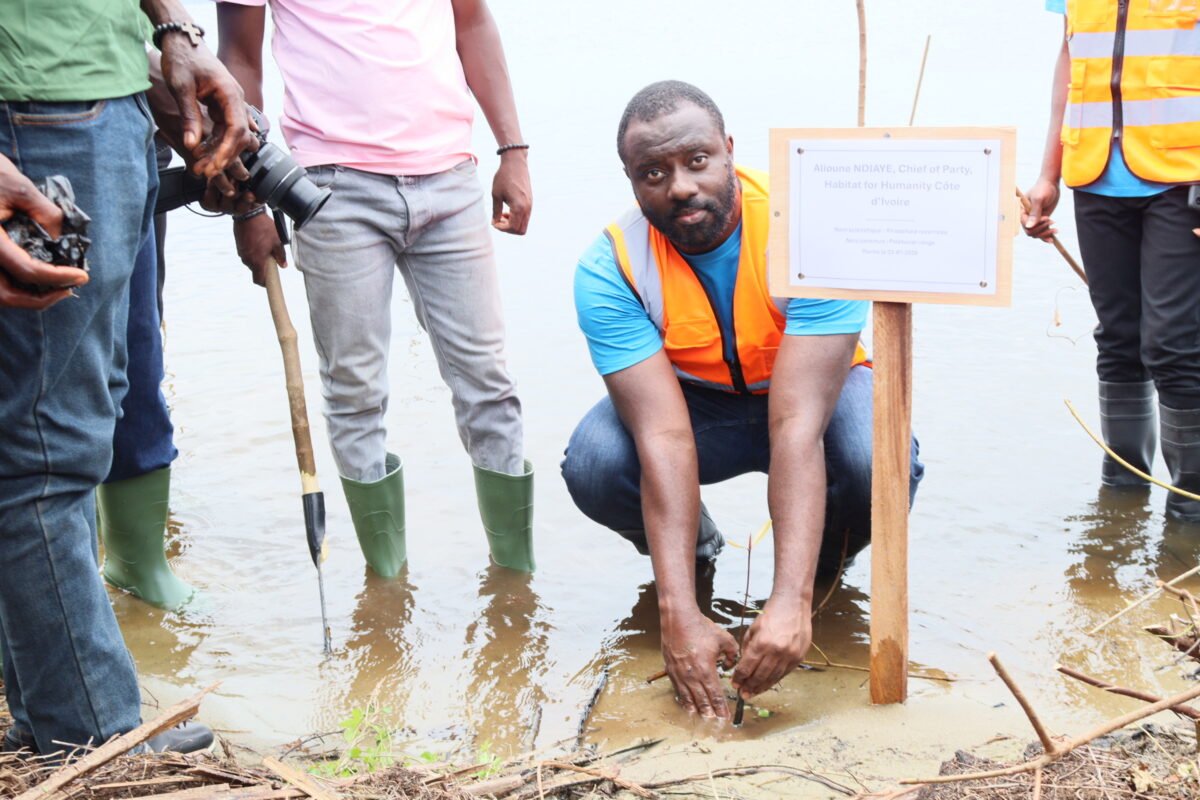
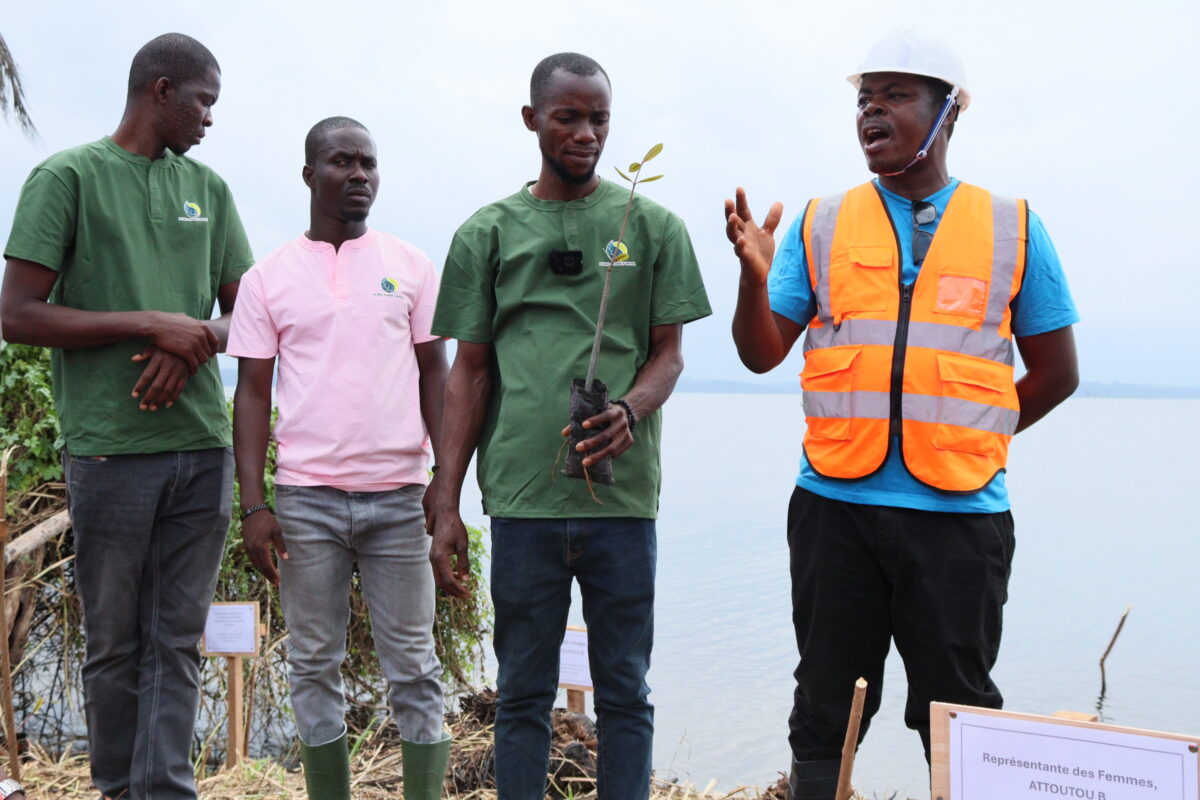
Chief of Party - Aliou ne Ndiaye giving a welcome speech at Attoutou B
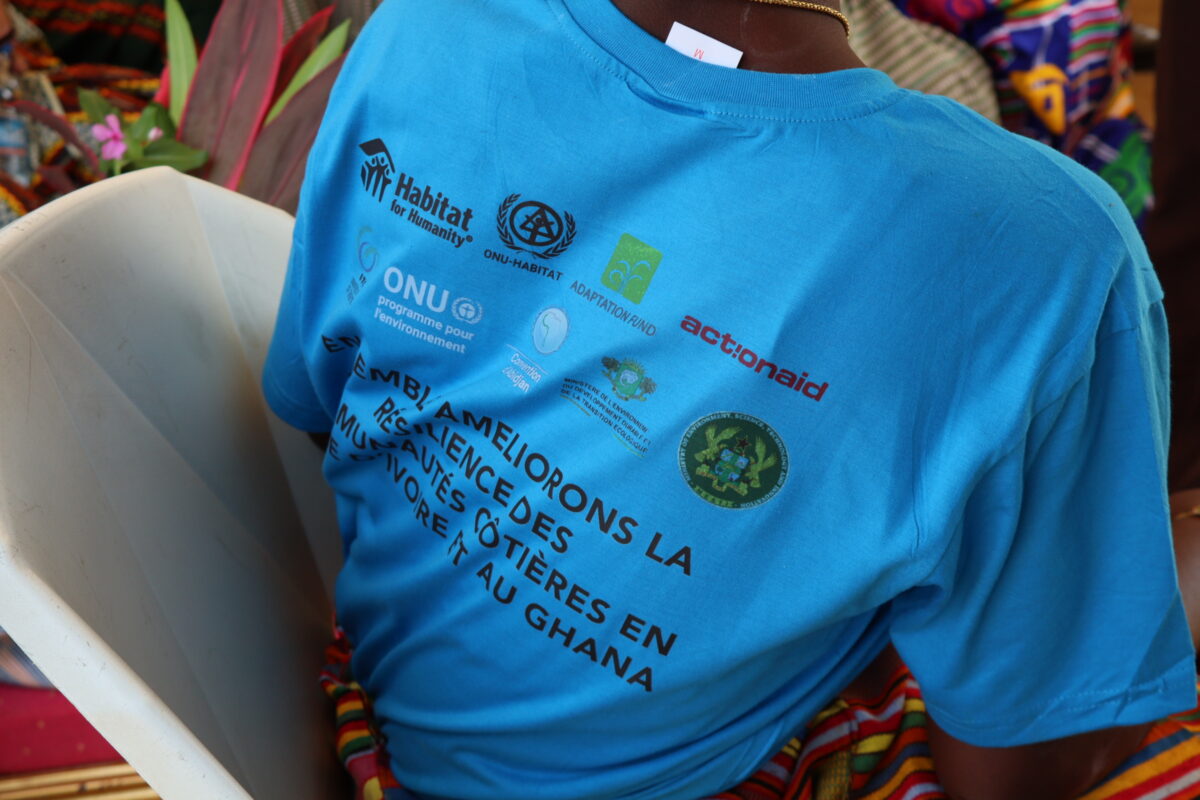
Funded by the Adaptation Fund, the project is implemented under the supervision of UN-Habitat, in partnership with Habitat for Humanity International (HFHI), the University of Twente, the Abidjan Convention, ActionAid, and the governments of Côte d’Ivoire and Ghana.
Restoring Mangroves to Protect Coastal Populations
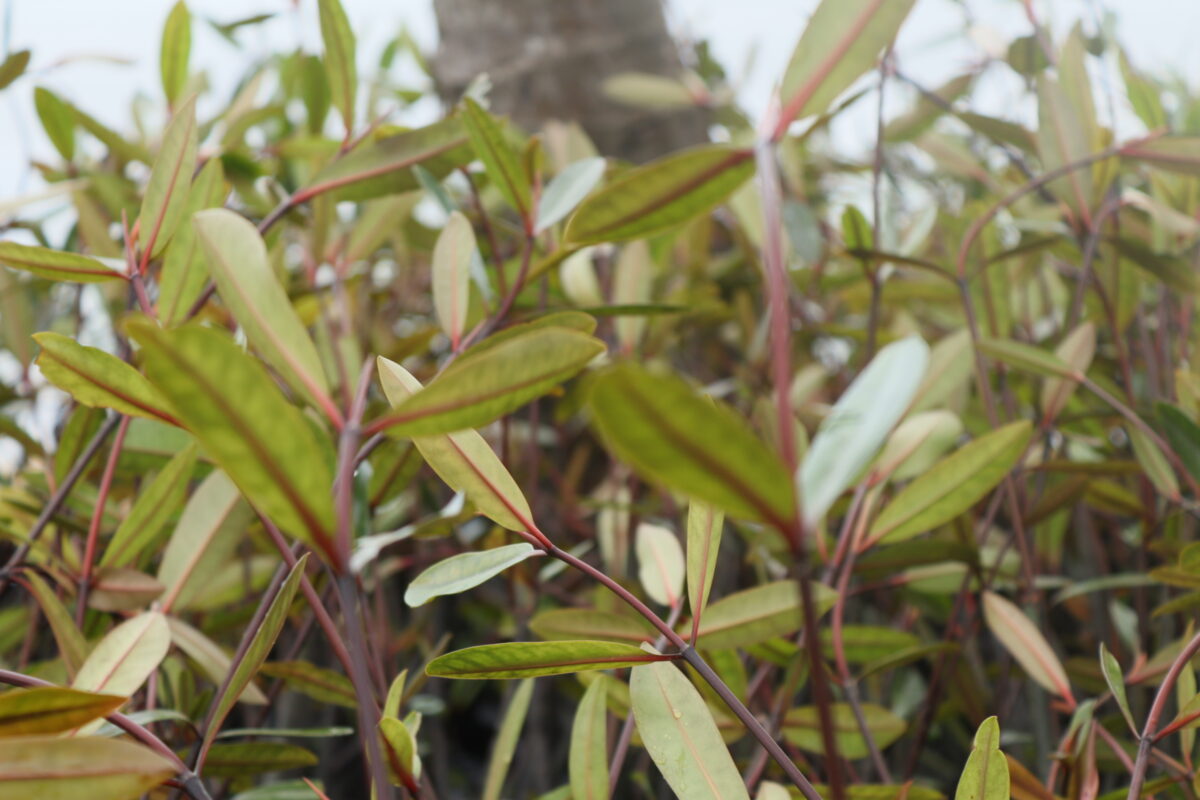
Mangrove Seedlings
Mangroves serve as one of the first natural lines of defense against the impacts of climate change. They reduce coastal erosion, limit flood damage, protect lagoon banks, function as biological nurseries for marine wildlife, and store vast amounts of carbon.
However, these ecosystems face critical degradation.
In Côte d’Ivoire, nearly 95% of mangroves have disappeared in less than fifty years, while in Ghana, coastal ecosystems suffer from continuous pressure due to erosion, soil salinization, urbanization, and climate shocks.
In response to this emergency, the program relies on Nature-based Solutions to sustainably strengthen the resilience of coastal communities.
Partnering for coastal resilience
The initiative brings together communities, government institutions, technical partners and development organizations to restore mangrove ecosystems and strengthen climate resilience. By combining local knowledge with technical expertise, the initiative is laying the foundation for lasting environmental and community benefits across Côte d’Ivoire and Ghana.
The project plans for the overall restoration of 582 hectares of mangroves across both countries:
In Côte d’Ivoire: 103 hectares will be restored (58 hectares in Jacqueville and 45 hectares in Grand-Bassam).
In Ghana: 479 hectares will be reforested across several coastal communities in the Greater Accra and Volta regions.
In total, nearly 87,000 people are expected to directly benefit over the long term from the ecosystem services and protection provided by these restored coastal forests.
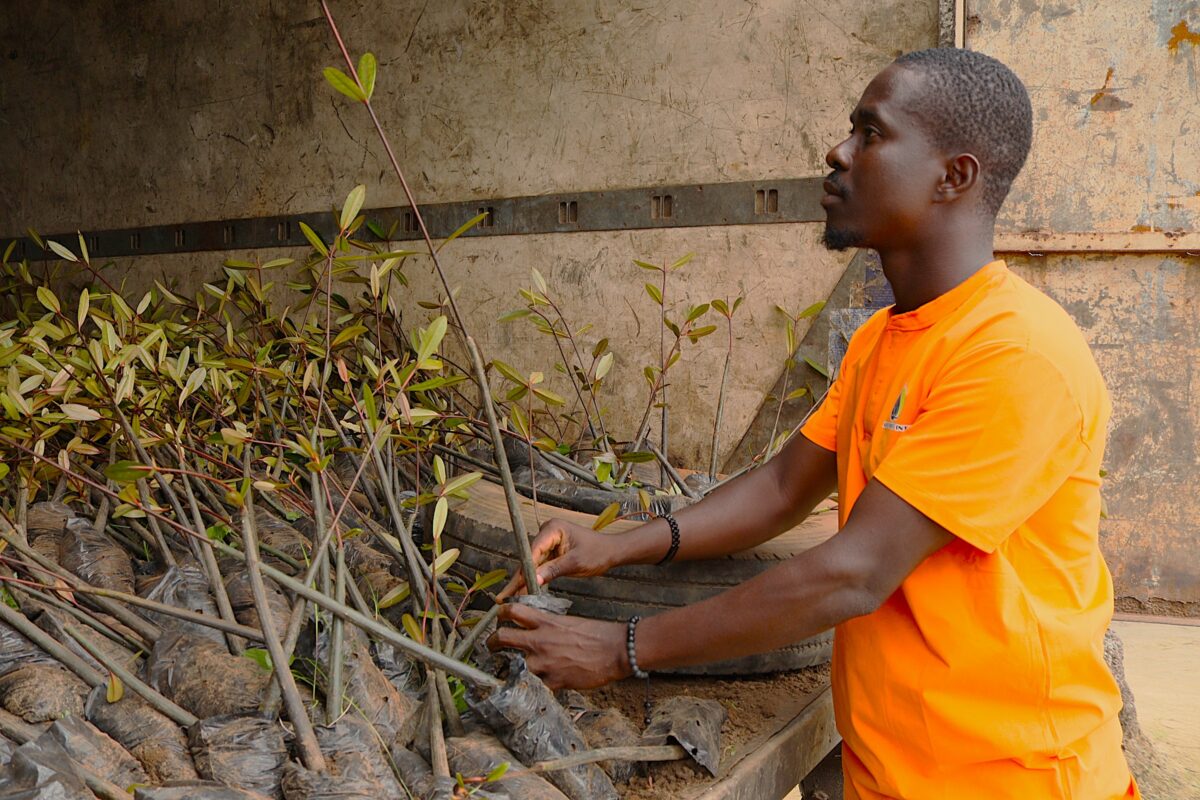
Partner helping community members offload mangrove seedlings
Collective Mobilization Centered on Community Engagement
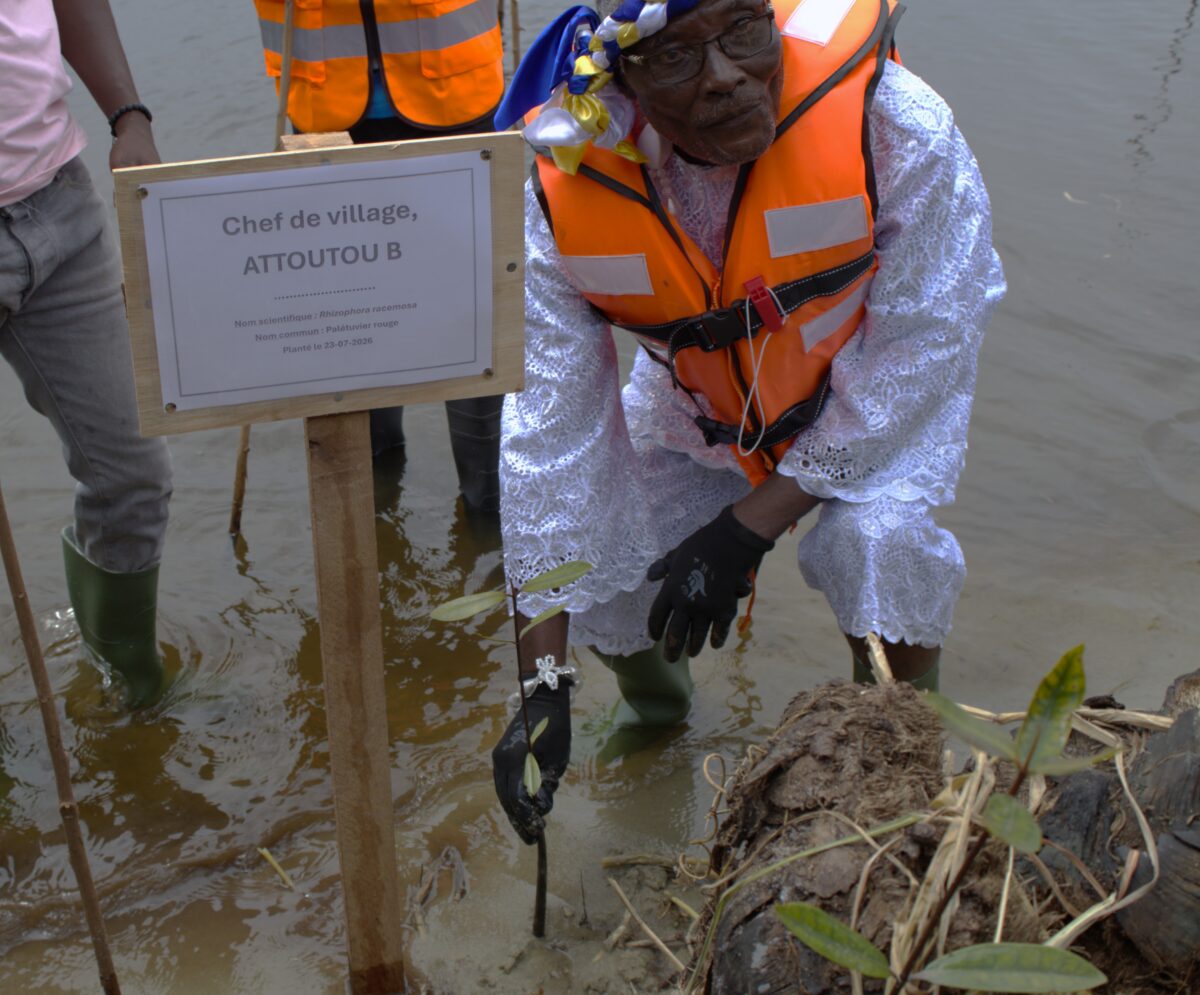
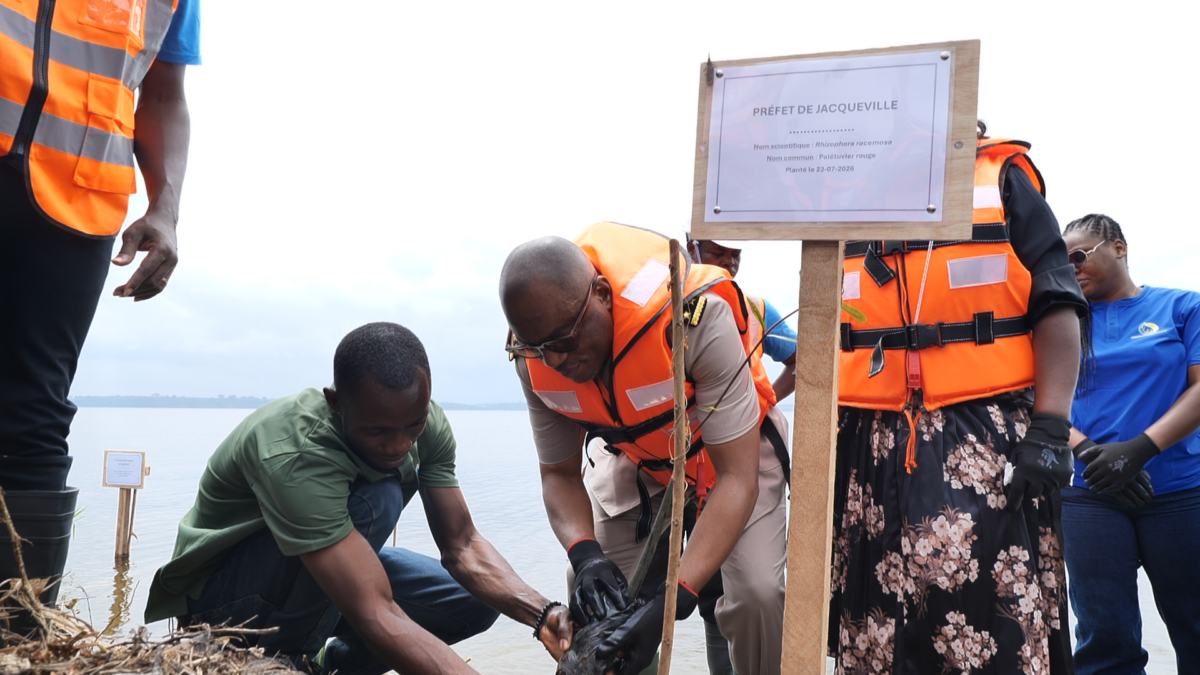
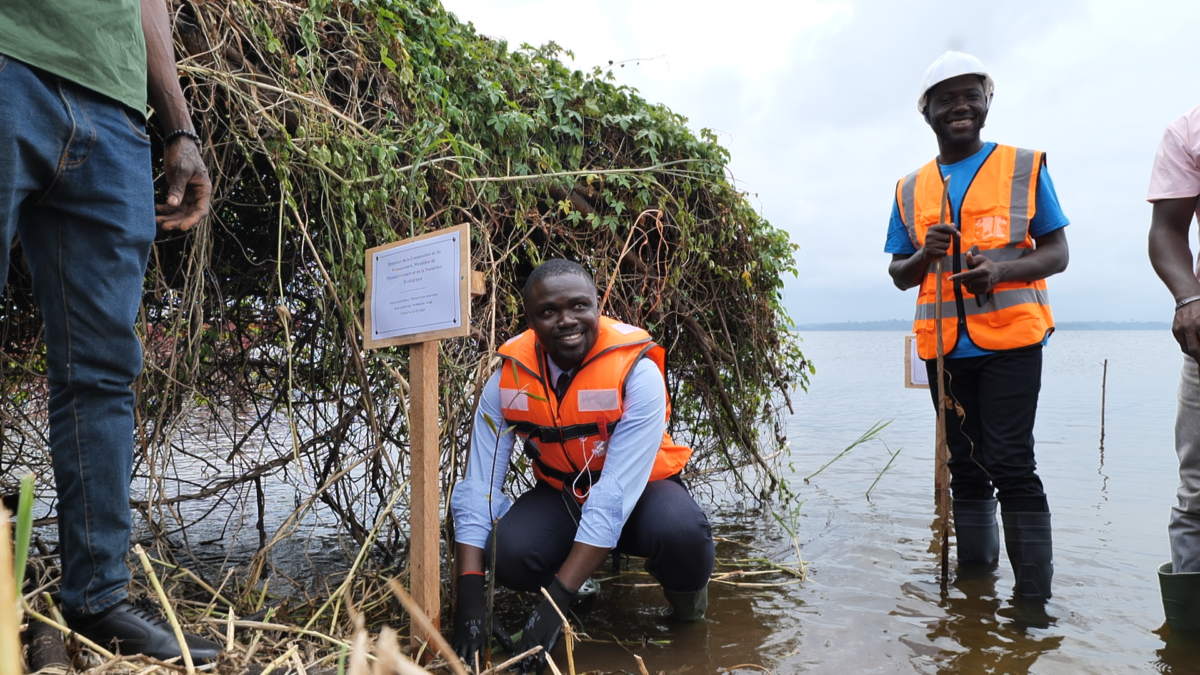
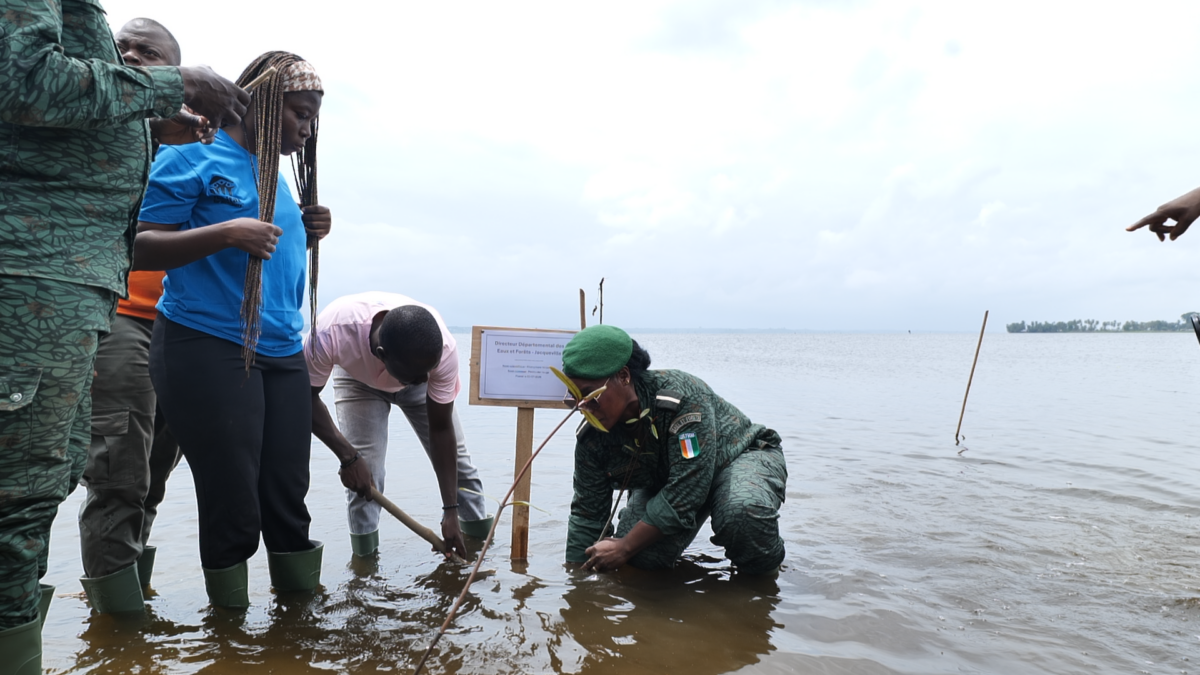
The ceremony concluded with a symbolic planting of Rhizophora racemosa (red mangrove), conducted jointly by representatives of partner institutions, administrative authorities, traditional chiefs, and local committee members from the villages of Taboth, Attoutou B, Tiémien, Koko, and Téfrédji.
Beyond the ceremonial milestone, the project relies on a participatory approach where local residents play a central role: collecting propagules, managing community nurseries, planting seedlings, and monitoring young tree survival. This local ownership serves as the true guarantee for the long-term sustainability of the interventions.