
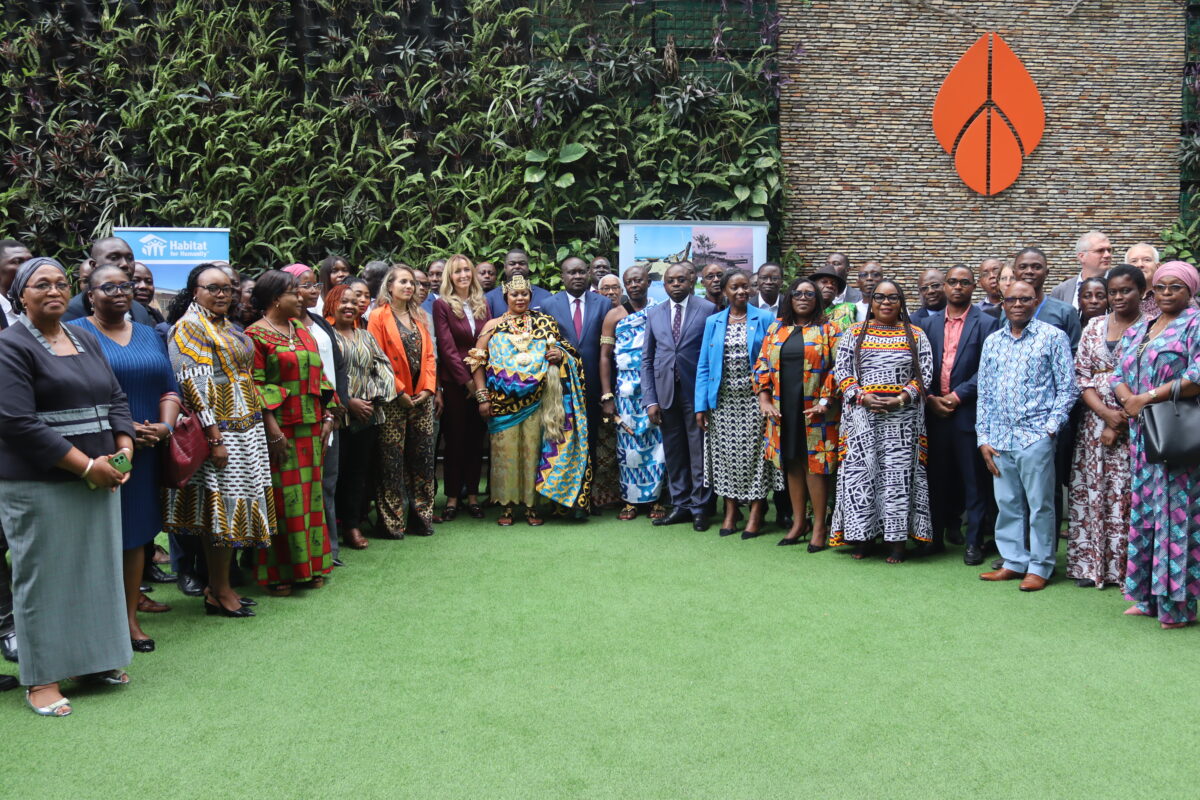
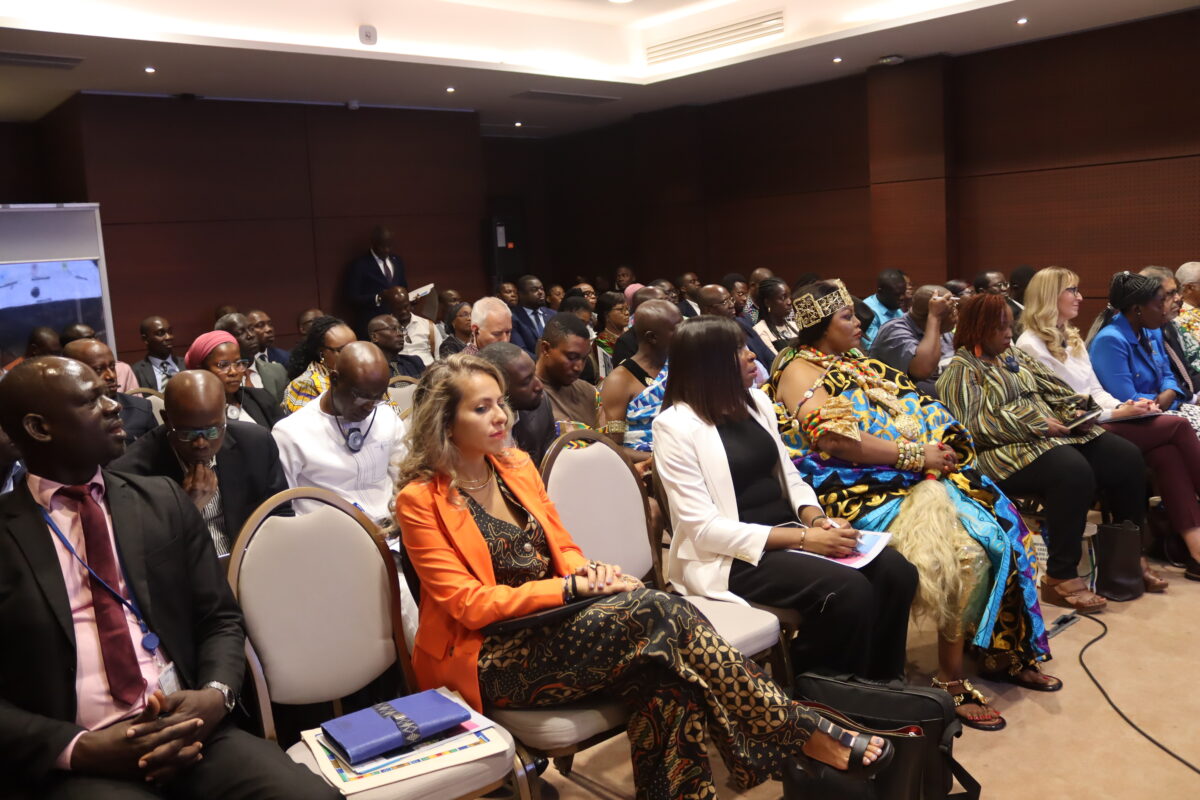
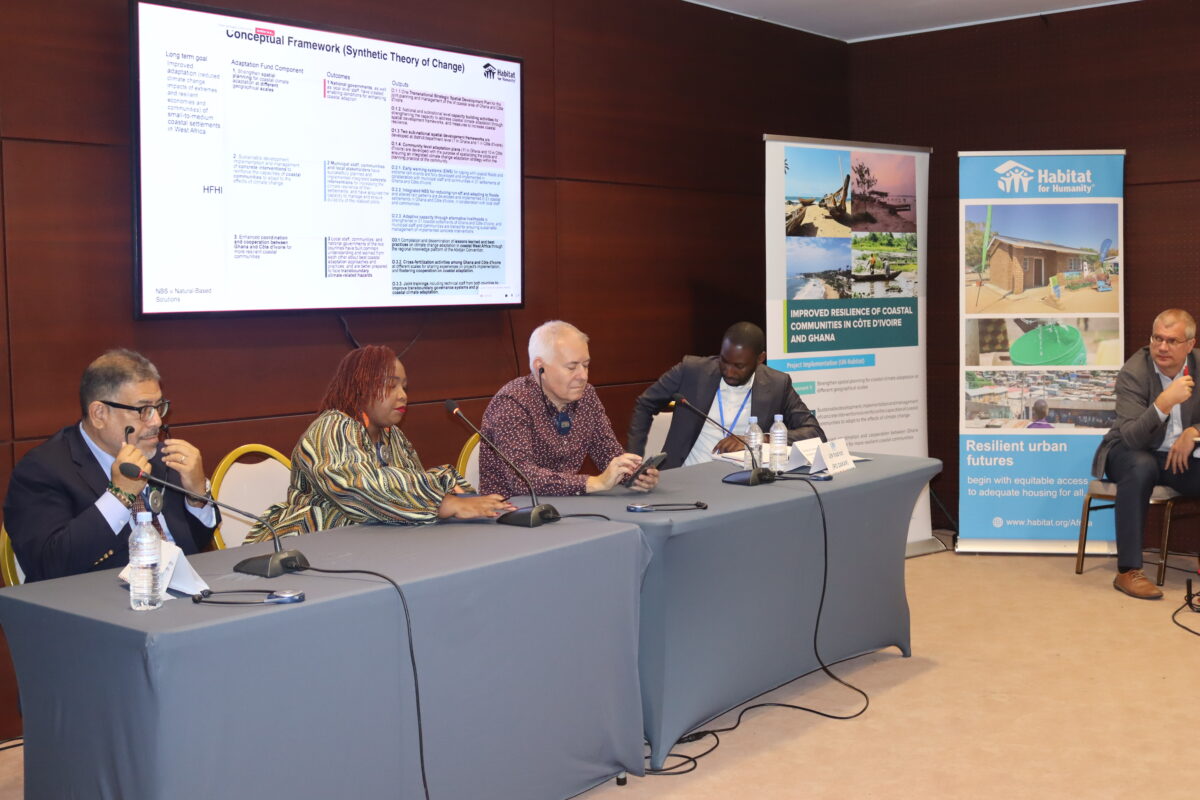
Coastal communities in Côte d’Ivoire and Ghana are on the front lines of climate change, facing rising sea levels, erosion, and extreme weather conditions that threaten their homes, livelihoods, and ecosystems. To address these urgent challenges, we joined forces with UN-HABITAT and partners to launch the Improved Resilience of Coastal Communities in Côte d’Ivoire and Ghana project, funded by the Adaptation Fund.
The initiative brings together the governments of Côte d’Ivoire and Ghana, technical experts, and local leaders to deliver practical, community-driven solutions across 21 vulnerable communities. Key interventions include:
Launched in Abidjan in September 2024, a signed agreement between Habitat for Humanity and UN-Habitat solidified the collaboration: UN-Habitat coordinates all partners, Habitat for Humanity leads community resilience work and partners including the University of Twente and the Abidjan Convention, provide technical expertise.
Why it matters
The impacts of climate change are deeply felt along the coasts of Côte d’Ivoire and Ghana. Rising sea levels and coastal erosion are shrinking shorelines by up to 2 meters annually, displacing families, destroying farmland, and weakening local economies. Saltwater intrusion and frequent storms are worsening conditions for fishing communities and farmers. This initiative provides a comprehensive, community-centered approach – a scalable model for resilience-protecting homes, restoring ecosystems and empowering communities.
Our goal is to:
Linking local action to global advocacy
This project comes at a critical moment in the global climate agenda. At COP30 in Belém, Brazil, housing was recognised as central to achieving climate goals. The Belém Call to Action on Sustainable and Affordable Housing was announced at the first Ministerial Meeting of the Intergovernmental Council for Buildings and Climate — affirming that housing affordability and sustainability must be pursued together.
While the recognition of the built environment at the conference signals progress, our research “Climate Action Through Housing and Informal Settlements,” shows only 8% of national climate plans through the National Determined Contributions (DCs) prioritize housing, while nearly 60% mention it only marginally or not at all — underscoring a critical gap in both climate planning and finance.
COP30 delivered meaningful progress on climate finance, most notably a global commitment to triple adaptation funding by 2035. However, current pledges still fall short of the scale required to protect communities already experiencing severe climate impacts.
In this context, grant-based mechanisms like the Adaptation Fund remain central to this effort. The Improved Resilience of Coastal Communities project in Côte d’Ivoire and Ghana is one example of how these funds translate into practical, community-driven solutions.
We continue to call for bold action on climate strategies that:
As our COO, Patrick Canagasingham, noted, “Housing is often the first and last line of defence against climate impacts. Without adequate funding, millions of families will remain exposed to risks such as flooding, extreme heat, and storm damage. As the stakes grow higher, the need for bold actions and investments that integrate housing into global and national climate strategies has never been more urgent.”