
Ghana’s coastline is under sever threat from climate change – erosion, tidal flooding and ecosystems loss are displacing families and destroying livelihoods. Some areas are losing up to eight metres of coastline annually, underscoring the pressing need for coordinated interventions.
In response, Habitat for Humanity, ActionAid Ghana (AAG), and UN-Habitat have partnered under the Adaptation Fund–supported project Improving Resilience of Coastal Communities in Côte d’Ivoire and Ghana. This initiative is designed to strengthen local capacities, restore natural barriers, and support livelihood resilience in 11 communities across three districts in the Volta and Greater Accra Regions.
Working with communities on the frontline
The Ghana phase began with close coordination among partners and early engagement with district authorities, local leaders, women’s groups, and youth representatives to ensure interventions reflect community realities.
Residents identified sea erosion, lagoon flooding, and mangrove degradation as immediate priorities. While communities requested large-scale defenses, partners proposed Nature-Based Solutions (NbS) —such as mangrove restoration, drainage improvements, and micro-infiltration cells — as effective, long-term measures that enhance and complement existing government infrastructure.
Discussions also highlighted how mangrove depletion, driven largely by the demand for fuelwood used in fish processing, has weakened natural barriers. Communities and partners discussed options such as mangrove nurseries, alternative energy sources, and community-led governance measures to ensure restored areas are protected and sustained over time. To ensure inclusive participation, outreach strategies were adjusted to achieve at least 50% women and 20% youth representation.
Strengthening collaboration through a national launch
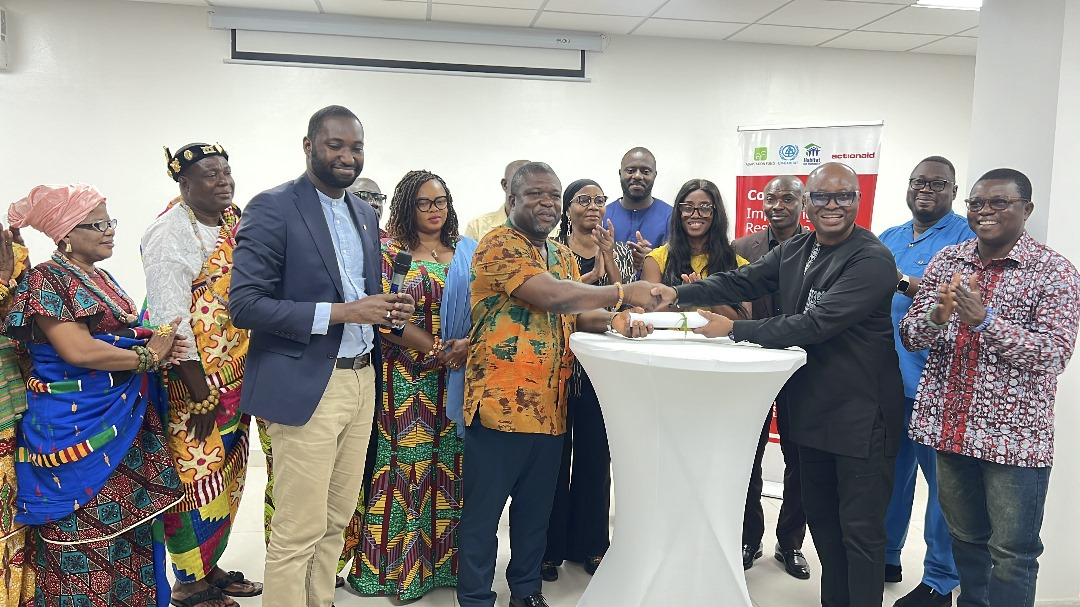
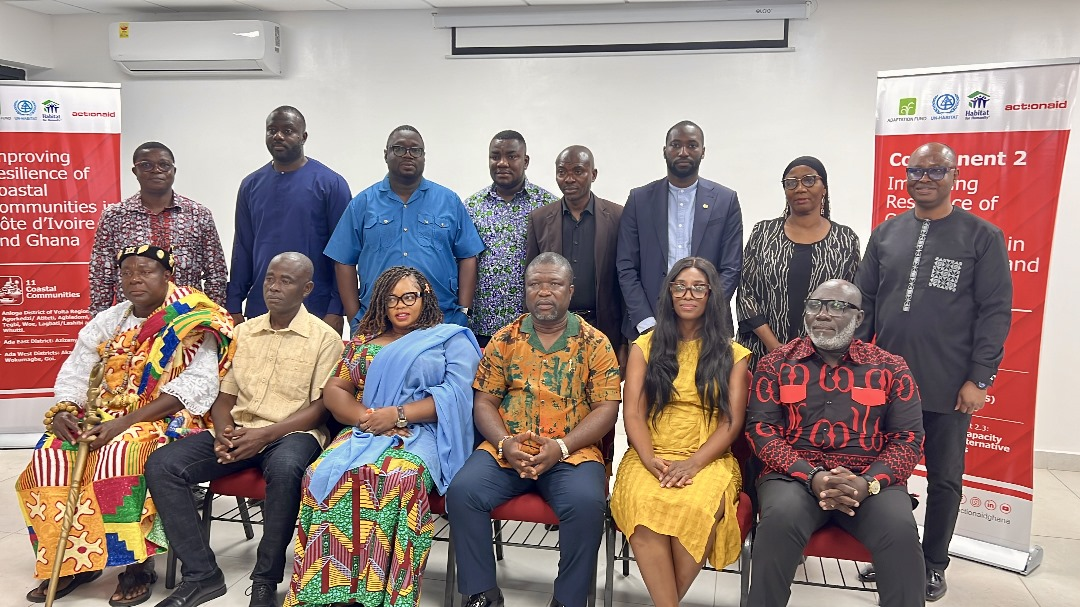
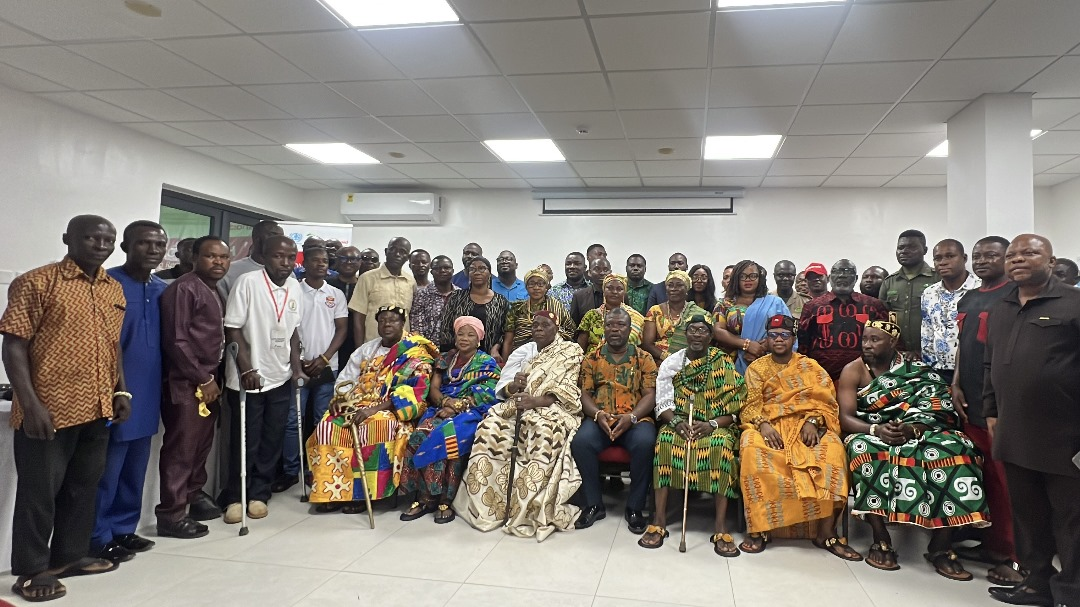
The partners convened an official launch on 27 August 2025, in the Volta region, bringing together government agencies, district authorities, civil society, and community groups to align on priorities and confirm roles and responsibilities.
At the launch, HFHI and ActionAid outlined how activities will support climate-resilient housing, disaster preparedness, livelihood recovery, and strong gender and social inclusion outcomes.
ActionAid Ghana’s Country Director, John Nkaw, highlighted the stakes facing Ghana’s 550-kilometre coastline. “Our coastal communities are on the front lines of this crisis. Rising sea levels, tidal waves, recurrent flooding, and erosion are not merely abstract figures; they constitute severe and immediate threats to lives, homes, and livelihoods.”
Volta Regional Minister Hon. James Gunu reaffirmed the project’s alignment with Ghana’s National Adaptation Plan and the importance of collaboration from national to community levels.
Mouhamadu Diene, the Regional Project Coordinator at UN-Habitat, emphasised the importance of community involvement in the project. « The success of this initiative relies on community ownership. We encourage the people, especially women, to embrace and support these interventions as they directly benefit their livelihoods, » he stated.
Alioune Ndiaye, Interim Chief of Party at Habitat for Humanity International, urged stakeholders to provide robust institutional support. « ActionAid Ghana is taking a critical lead in ensuring climate justice. To fully realise the benefits of this project, we need all stakeholders—government, civil society, and communities—to stand firmly behind them, » he urged.
Laying the foundation for lasting impact
After the launch, partners met with community members across the project areas to gather feedback and refine implementation plans. These sessions helped clarify key priorities including the need for clearer communication on Nature-Based Solutions, livelihood support for fishing-dependent households, and stronger alignment with district development plans.
As implementation progresses, the HFHI–ActionAid partnership will focus on delivering practical, community-informed solutions that enhance safety, strengthen livelihoods, and build long-term resilience for coastal families.